
Chimney flashing is the metal system that directs water away from the joint between a chimney and the roof. Think of it as a rain shield around the chimney’s base. Several overlapping pieces help water flow onto the roof instead of into your home.
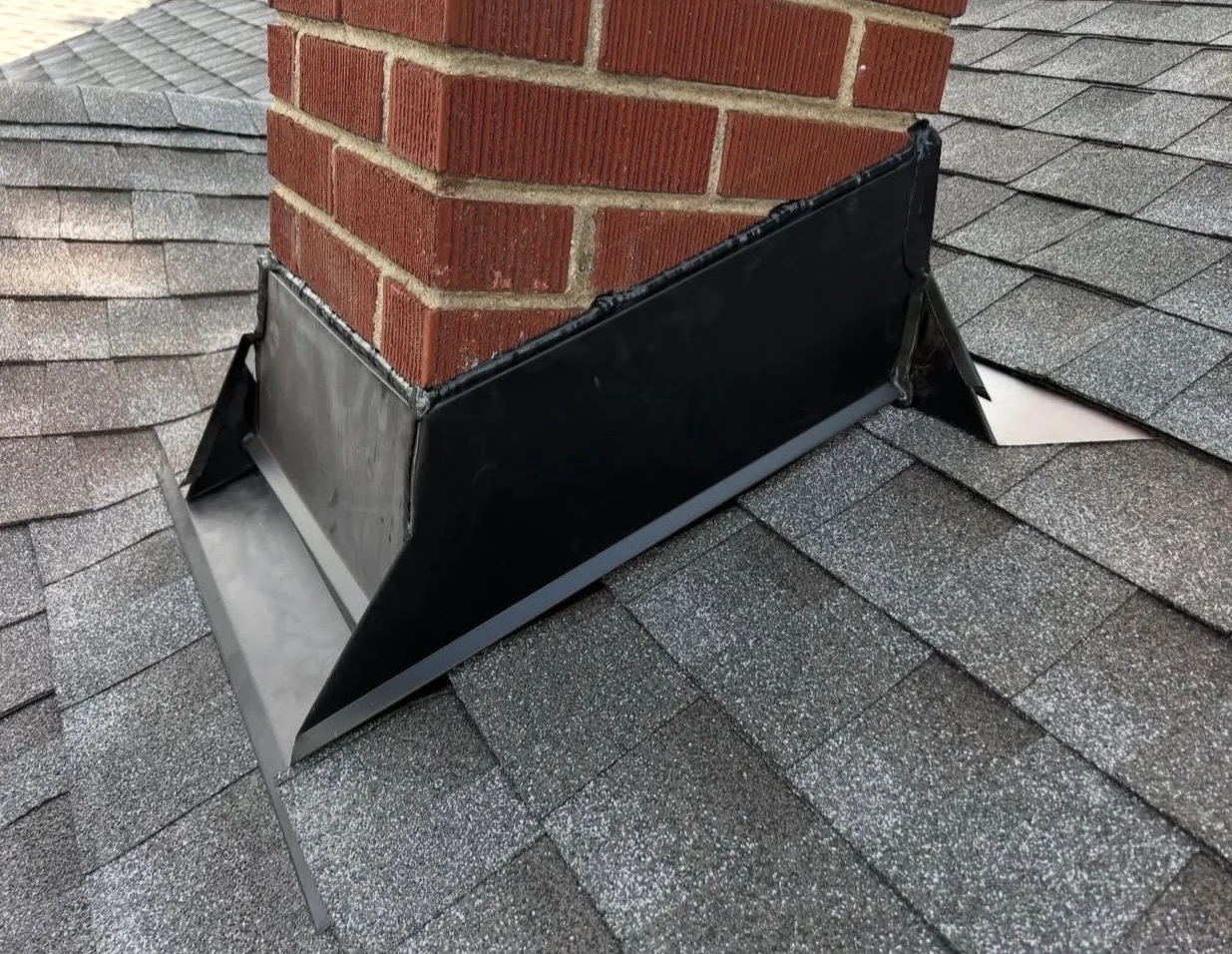
How does chimney flashing keep water out?
Rain runs down your roof. Where the roof meets a chimney, metal pieces overlap to guide that water around the brick and back onto the shingles.
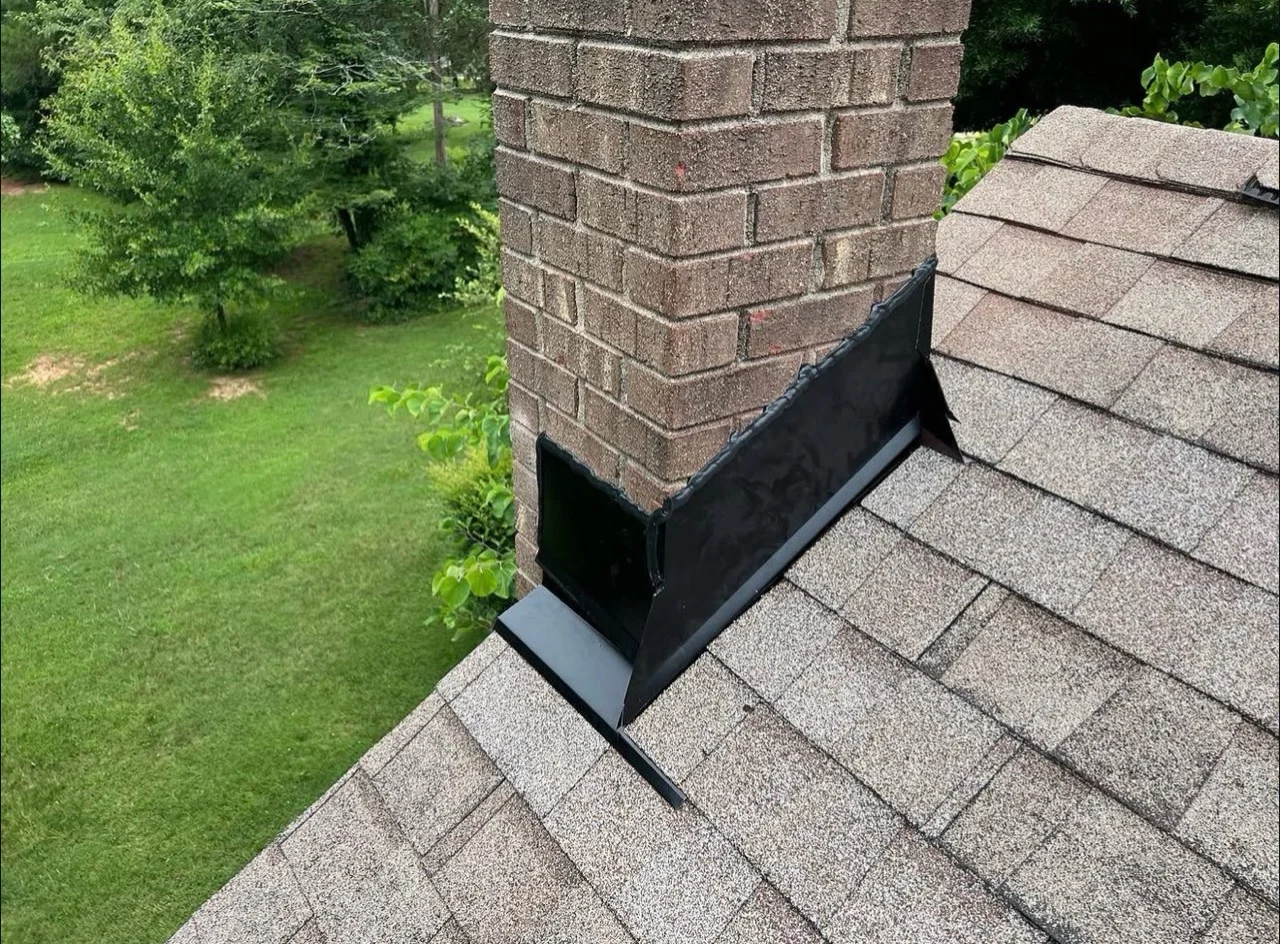
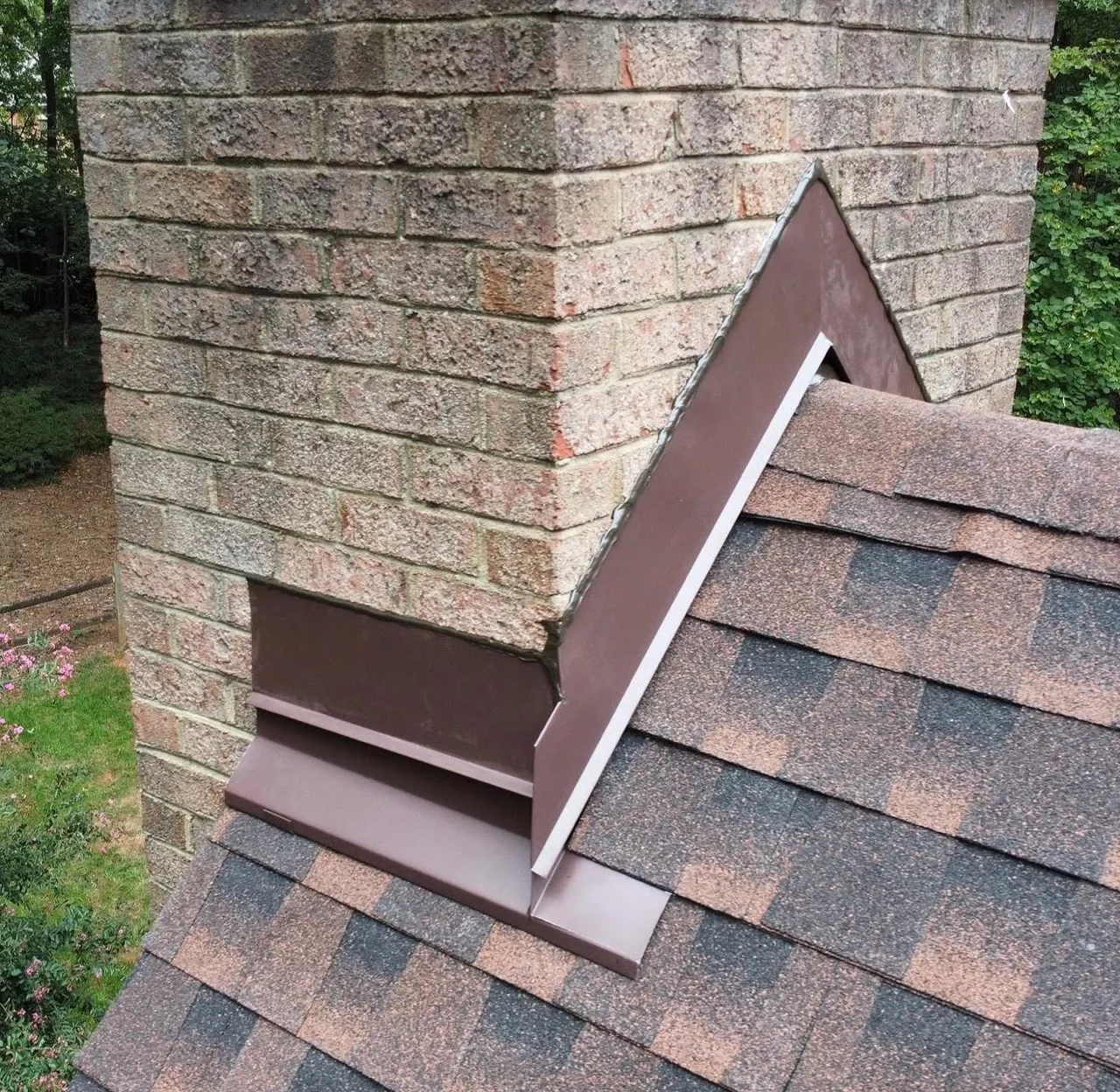
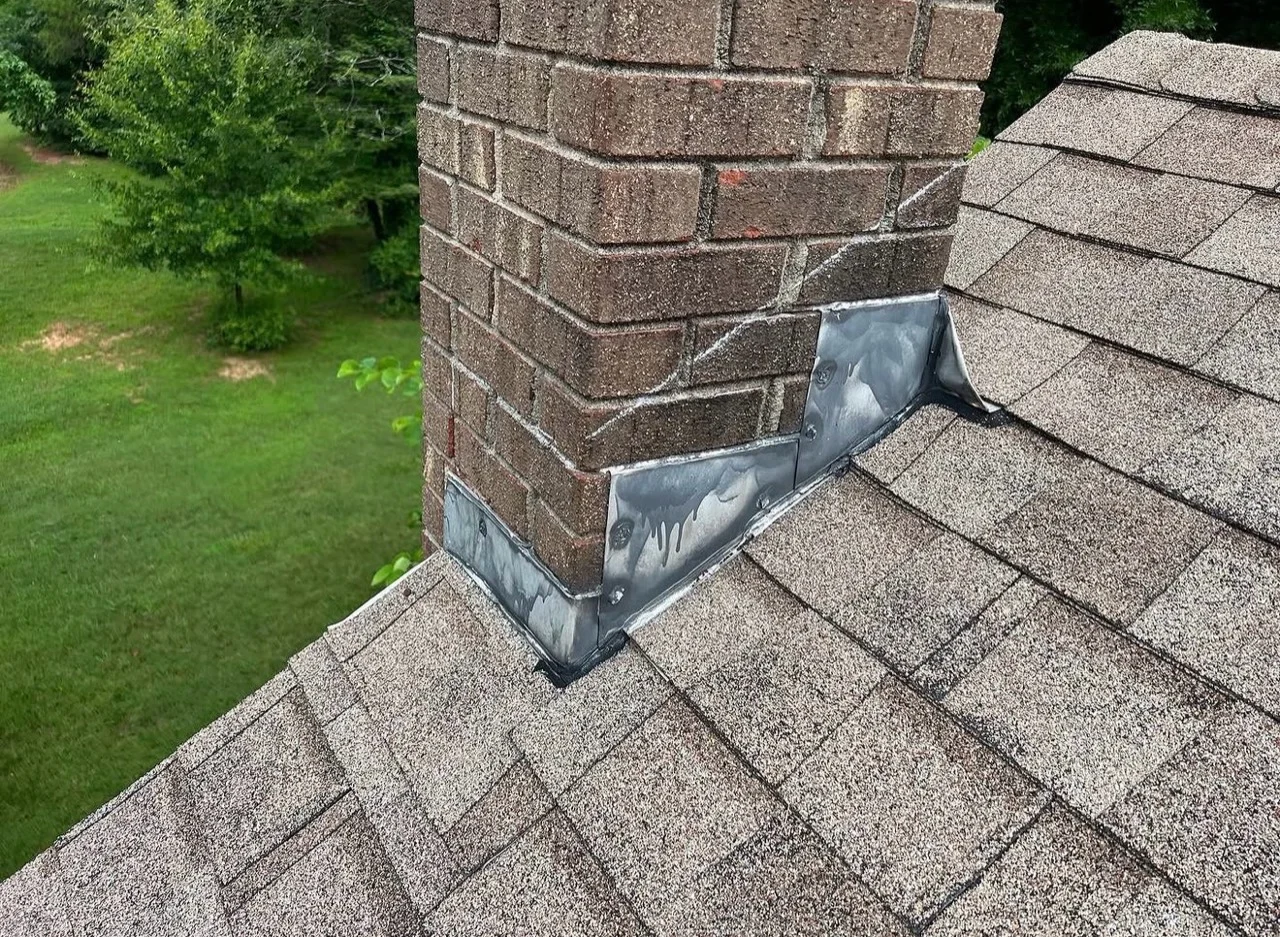
- Step flashing: small metal pieces tucked between rows of shingles along the chimney’s sides.
- Counterflashing: metal attached to the chimney that covers the top edges of the flashing below.
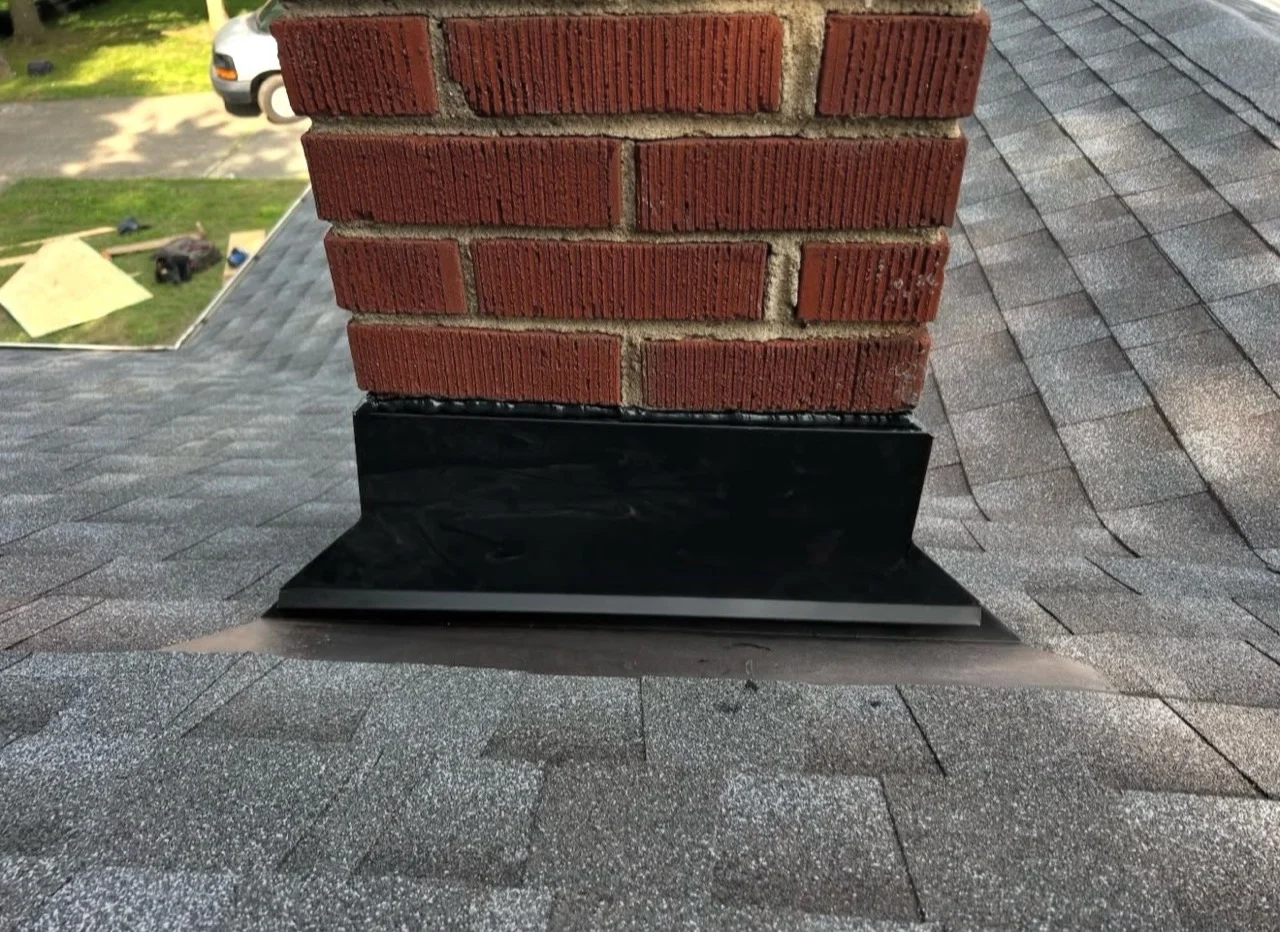
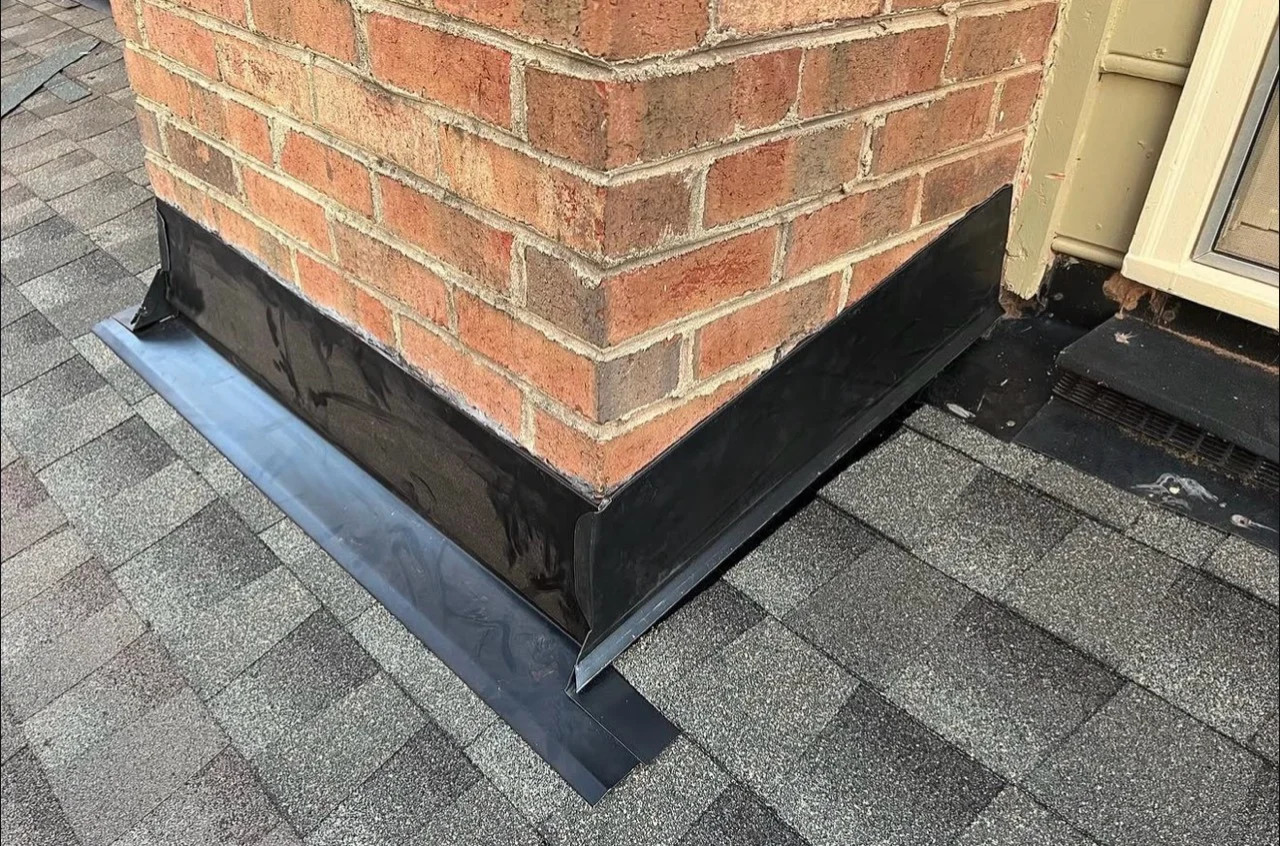
- Apron flashing: the metal at the downhill face of the chimney that sends water onto the shingles.
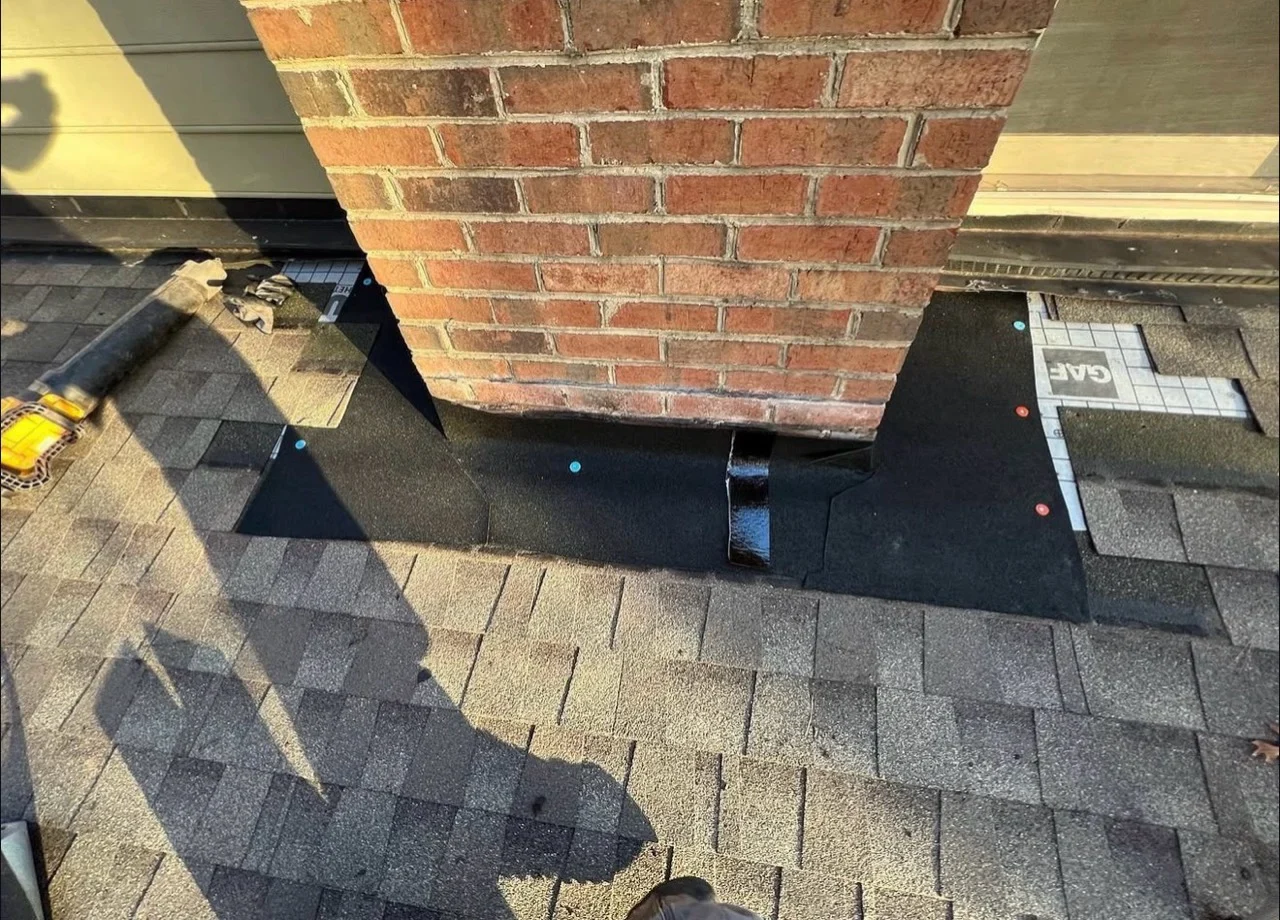
- Underlayment: a protective layer beneath the shingles. It adds protection below the visible roof surface.
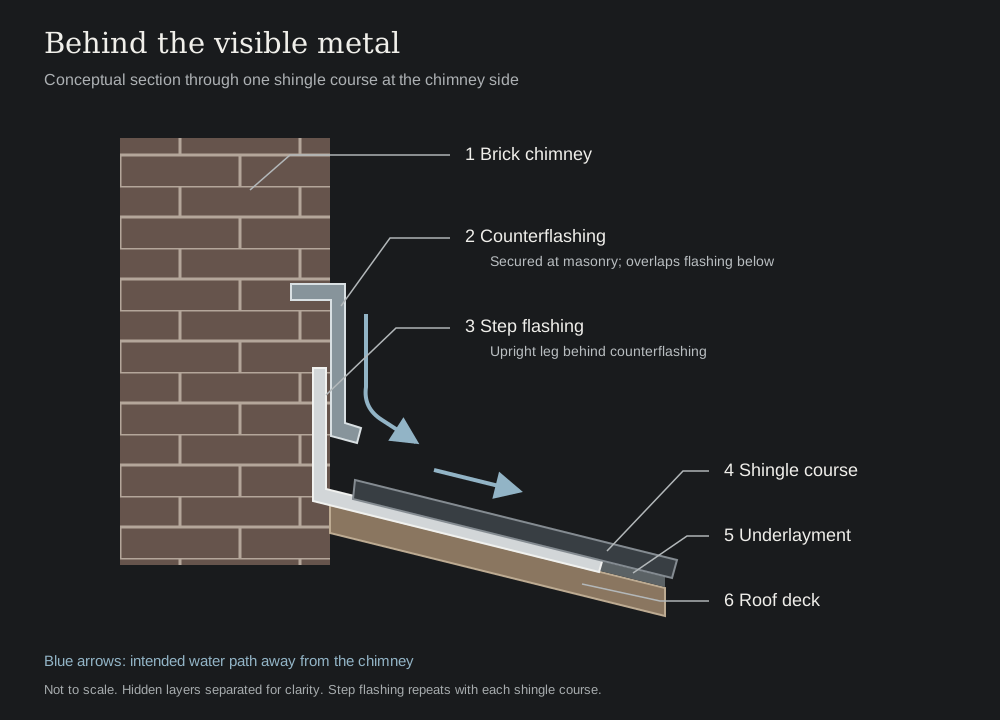
The pieces need to work together. The exact arrangement depends on the roof and chimney. GAF’s roof flashing guide explains how flashing helps protect vulnerable roof connections.
What is underneath the finished metal?
These photos show the same chimney at different stages. The wood supports the roof. A protective layer covers the connection before the finished metal is added.
1. Wood exposed
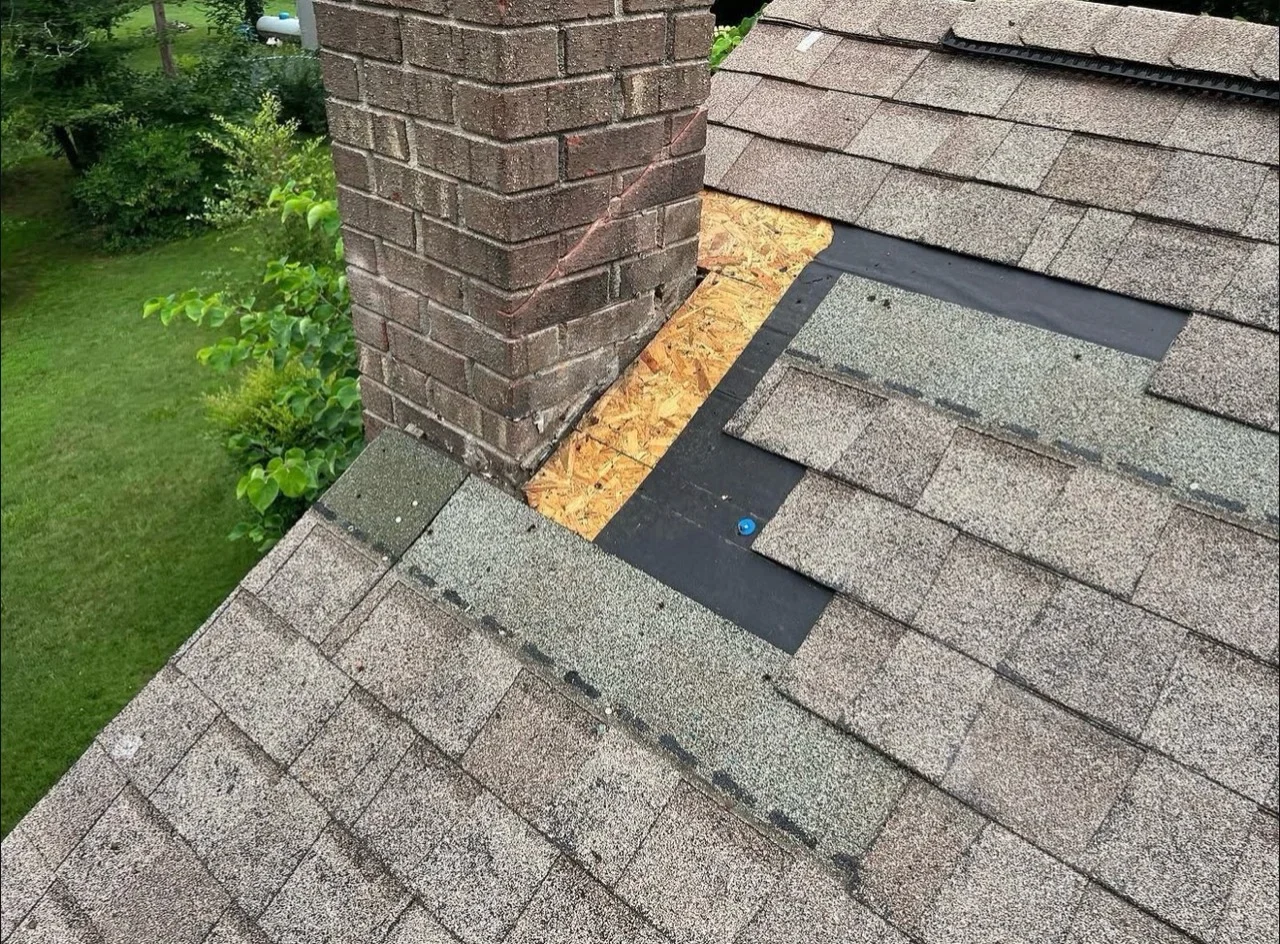
2. Protective layer added
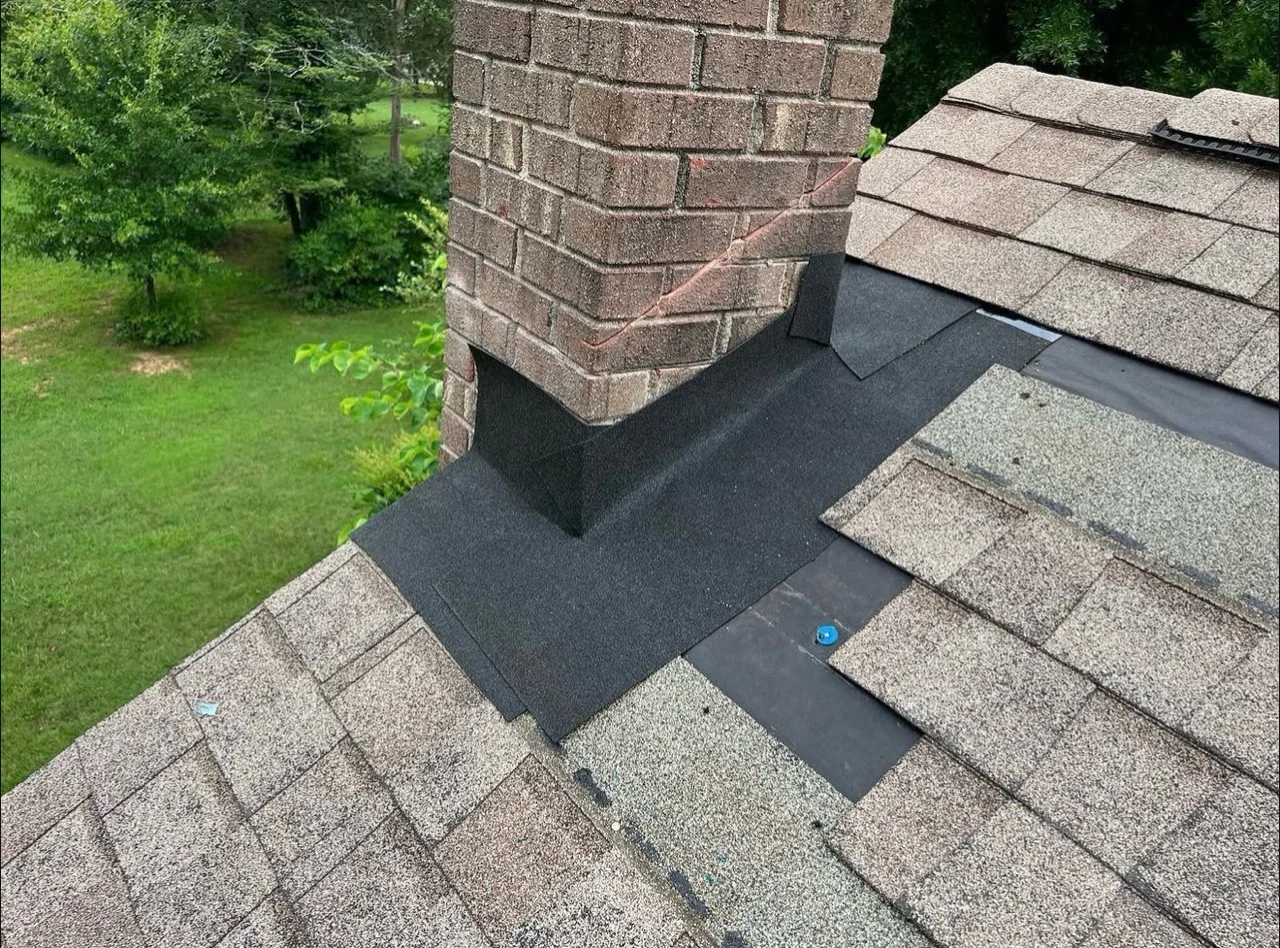
3. Finished metal flashing
A finished photo cannot show every hidden layer. That is why a repair may require lifting nearby shingles to see what is underneath.
What is a chimney cricket?
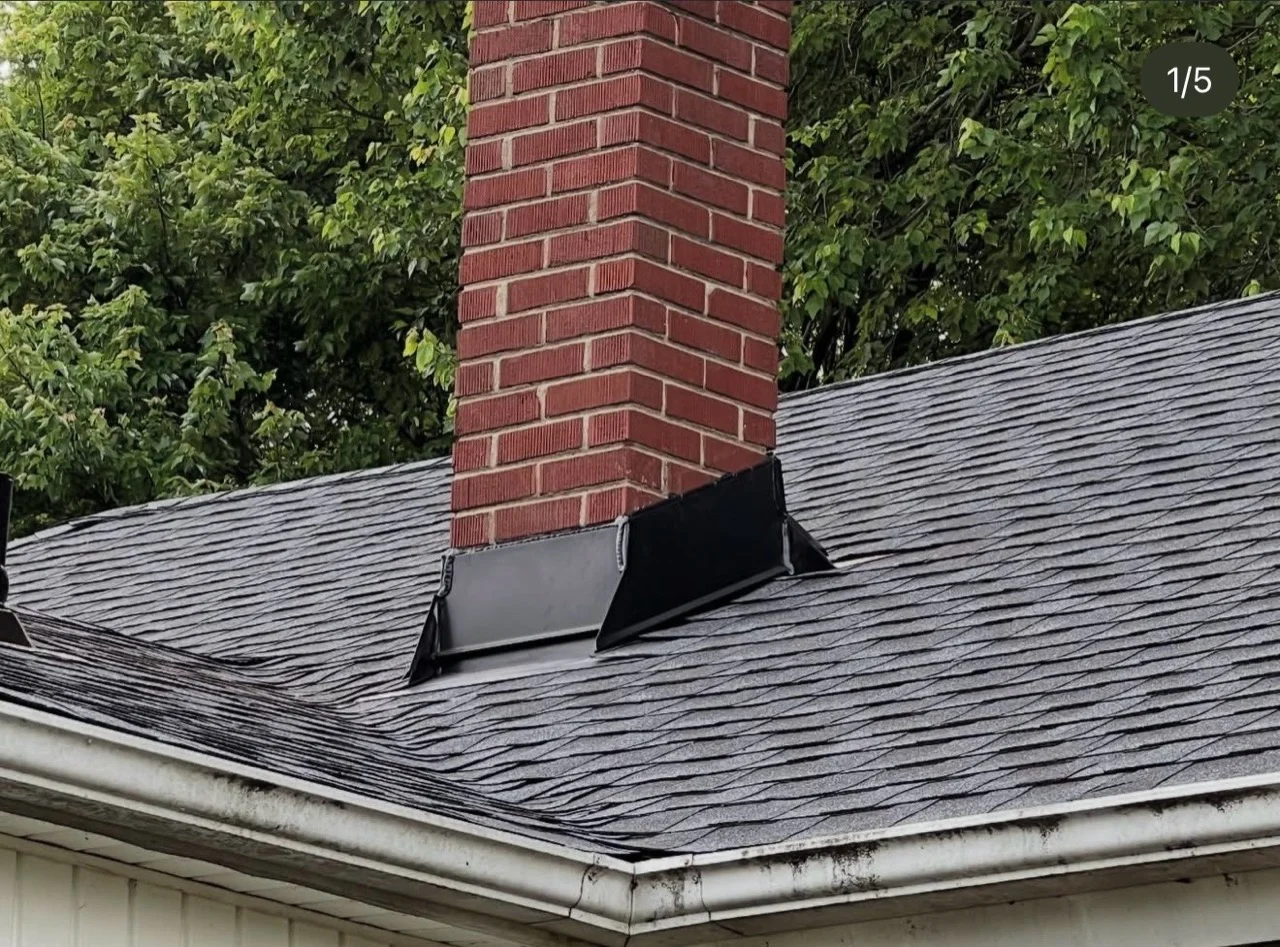
A cricket is a small, sloped structure behind a chimney. It helps split the flow of rain so water travels around the chimney. Whether your roof needs one depends on the chimney’s size, position and the installation requirements.
Why is water leaking near my chimney?
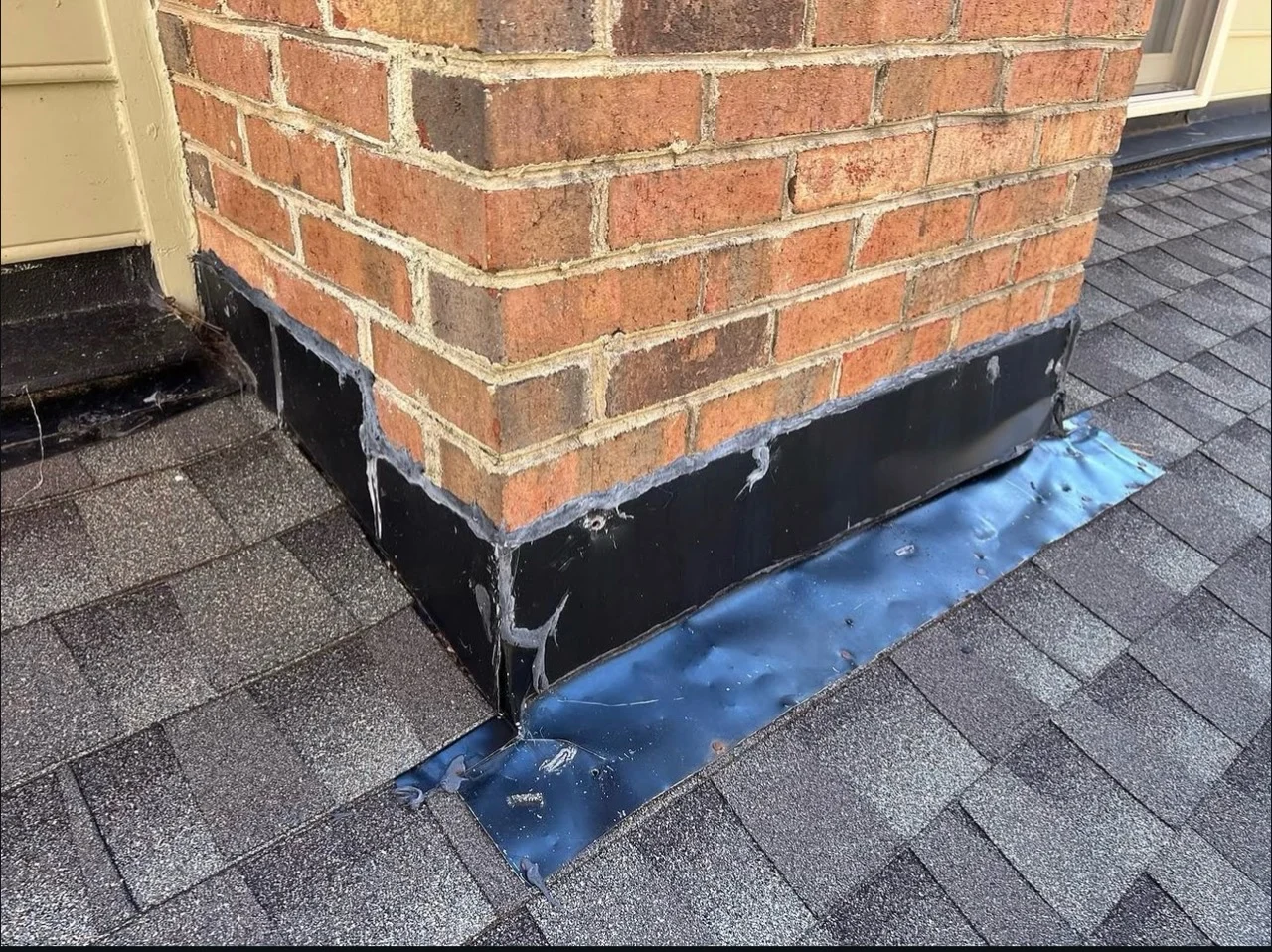
Damaged metal, open joints or worn shingles can let water in. But a stain near the chimney does not always mean the flashing is the cause. Water can also enter through cracked brickwork or the chimney’s top, called the crown.
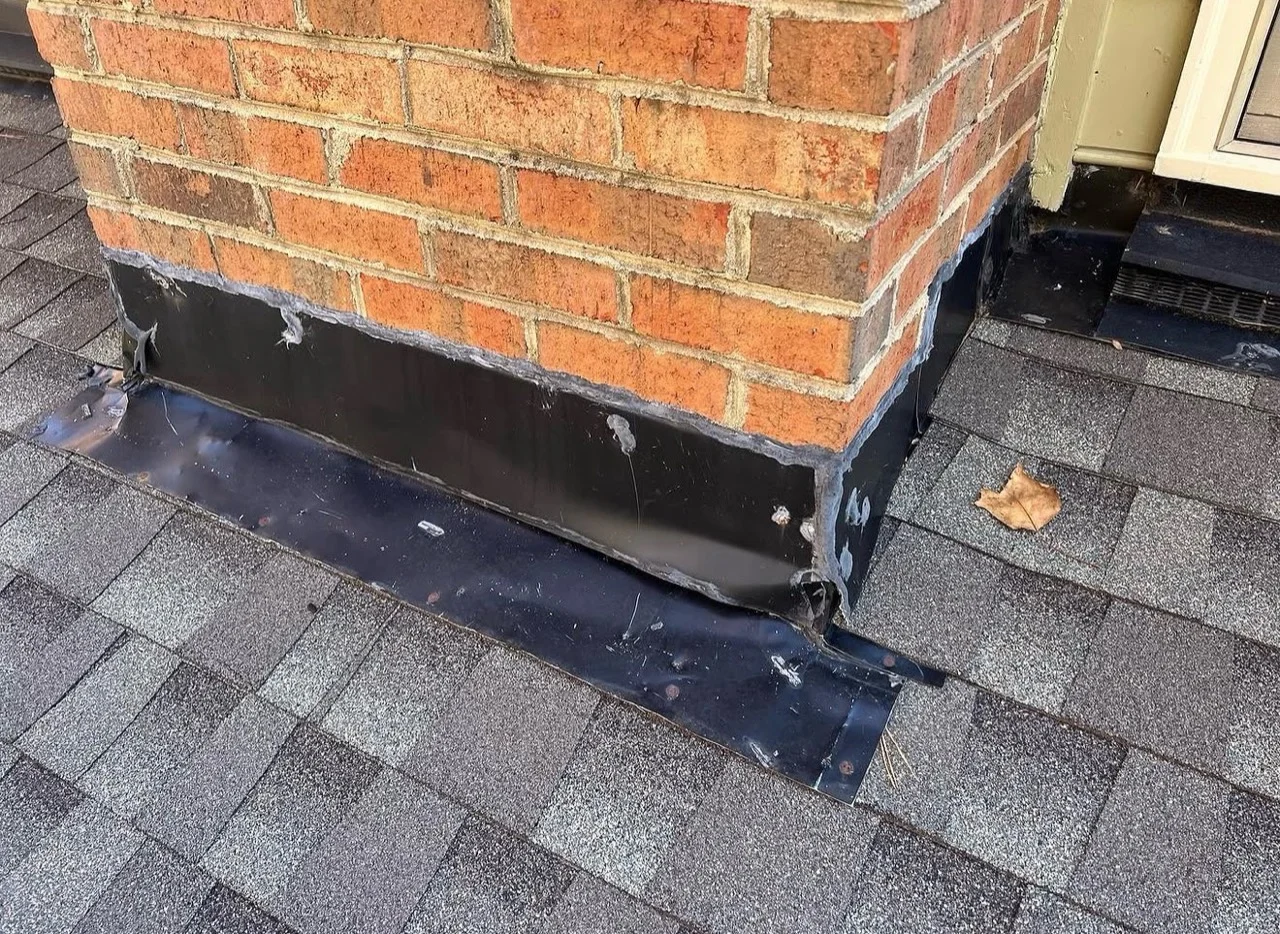
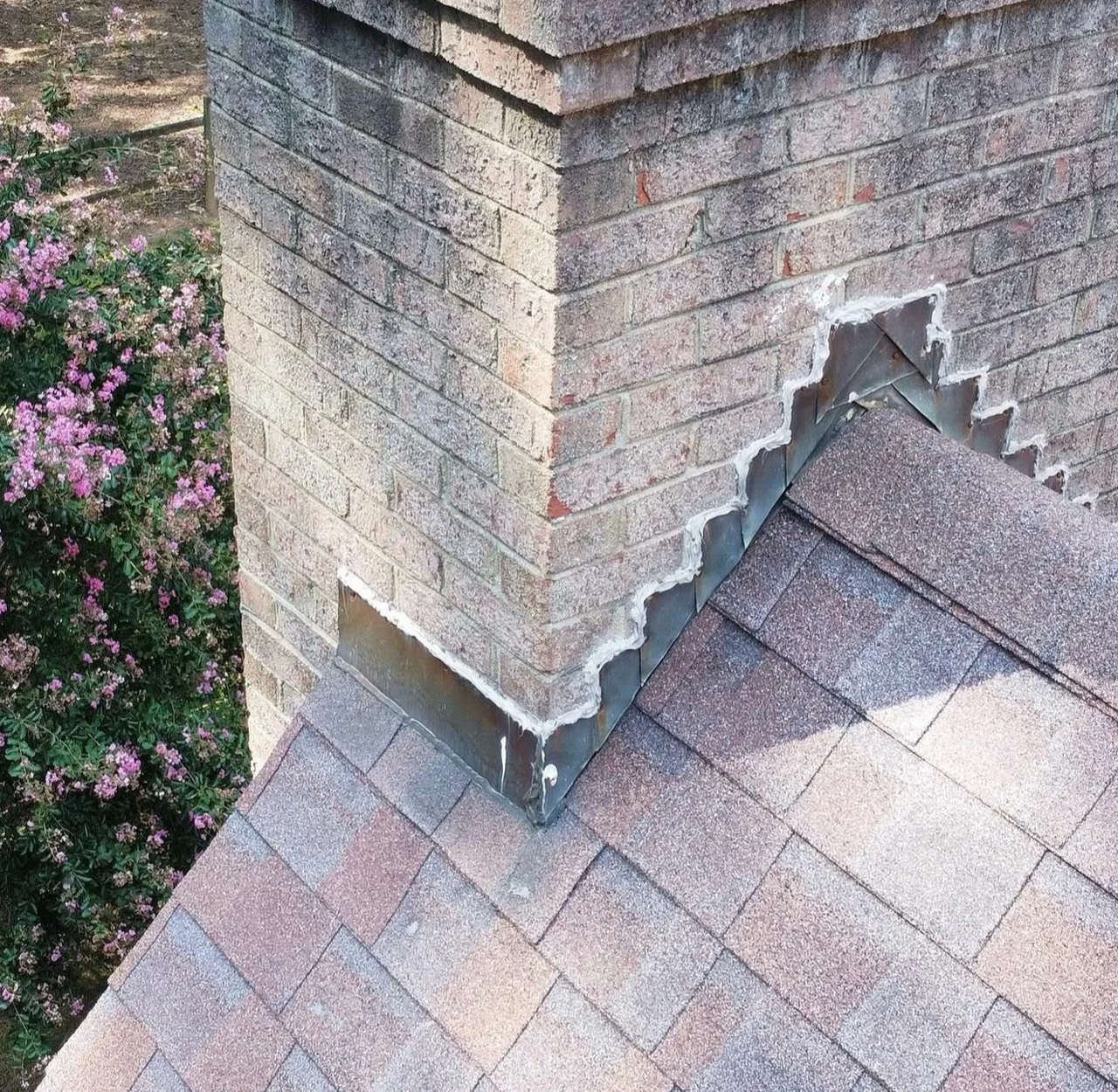
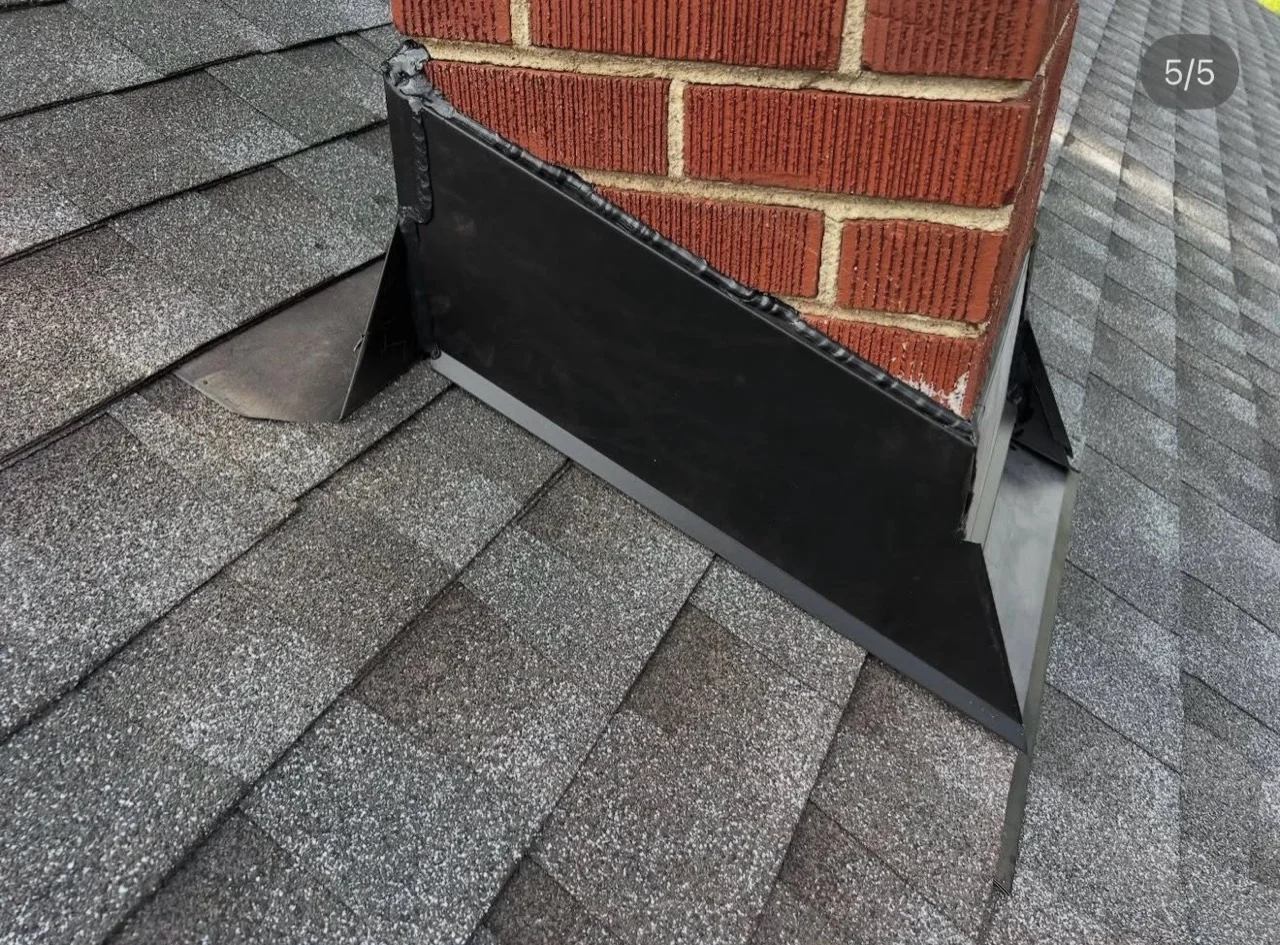
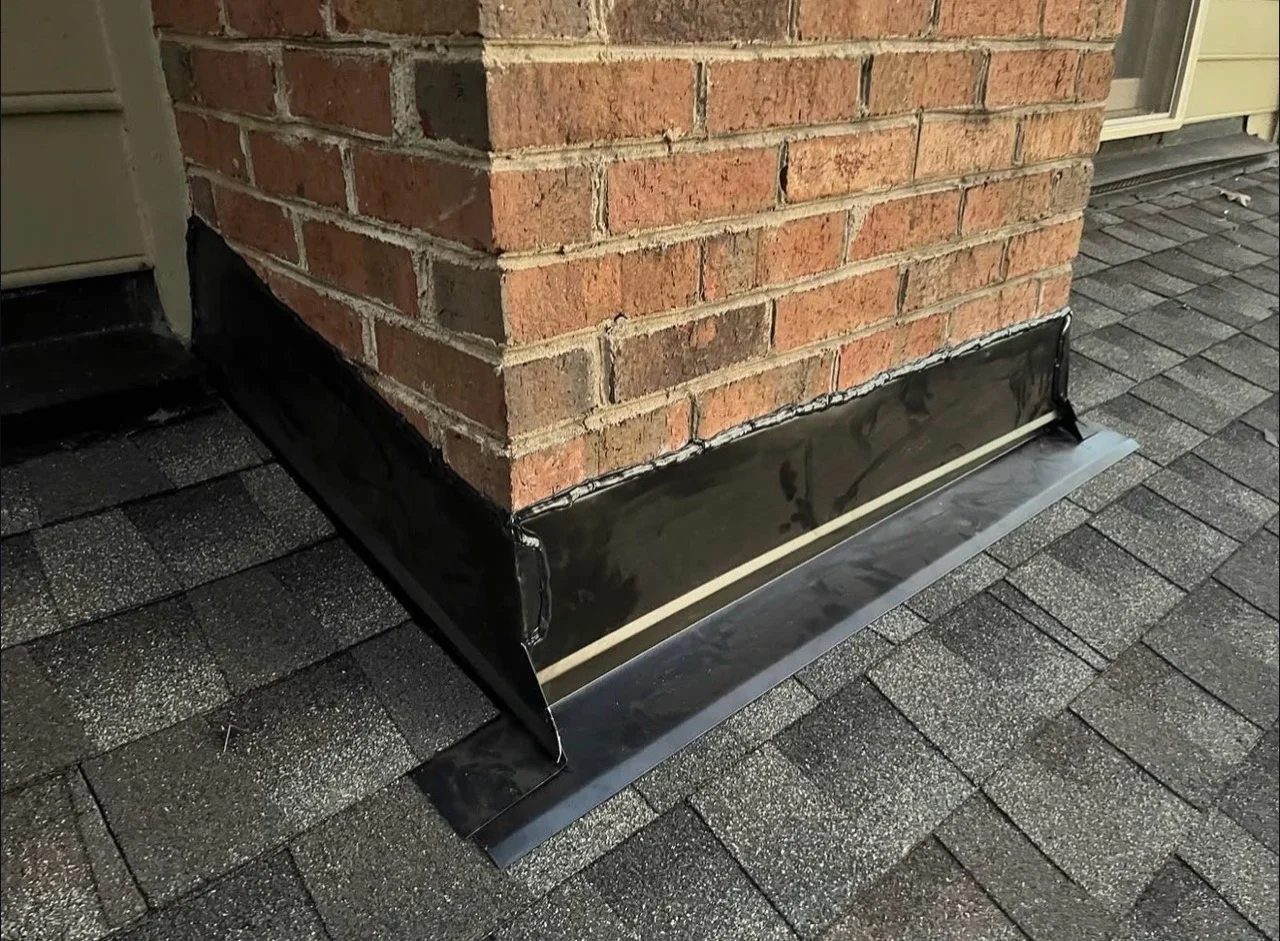
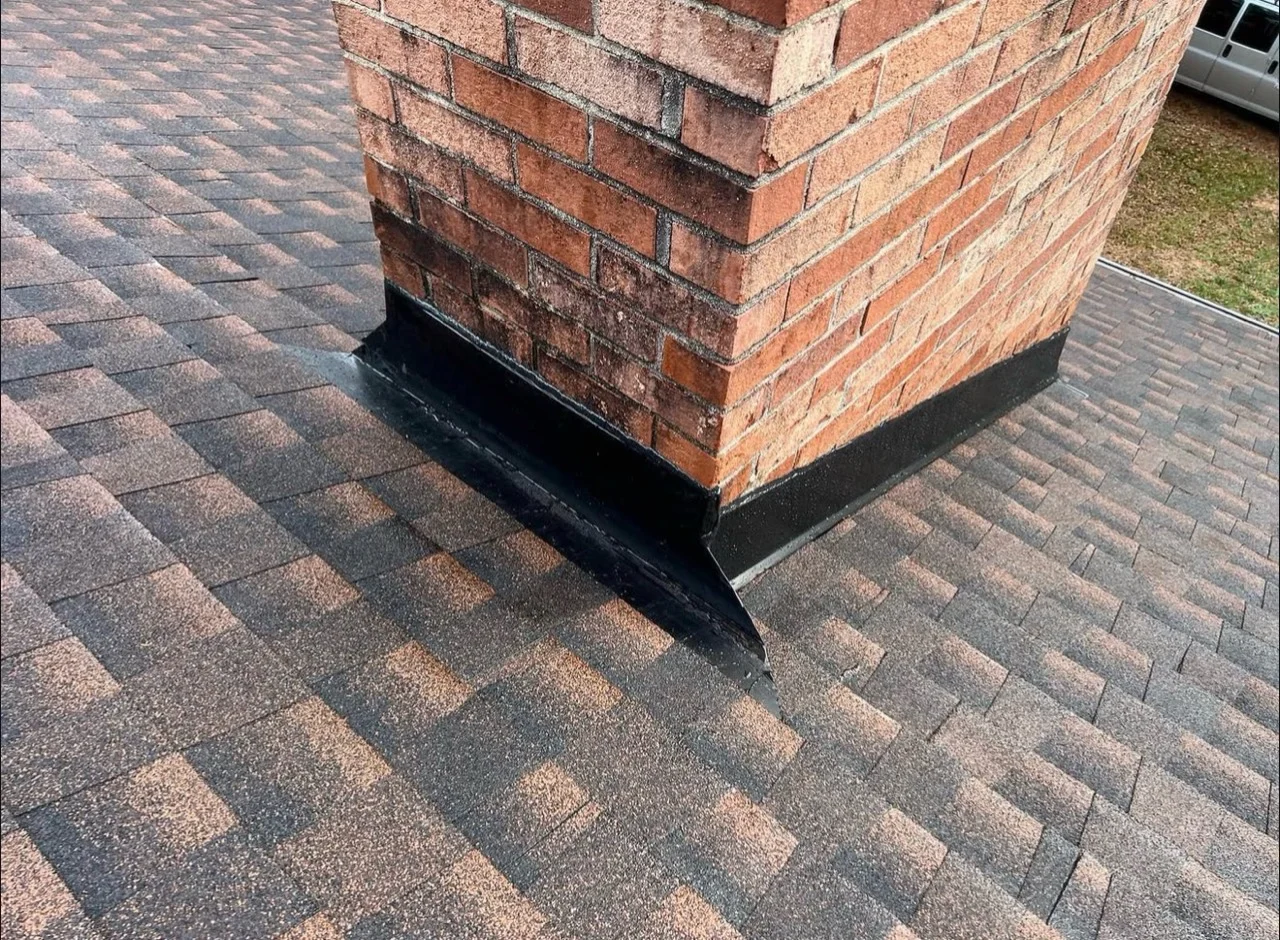
This photo shows older metal with visible sealant and surface wear. Those are areas to check; the photo alone does not tell us where a leak starts.
What should you look for?
- A new ceiling or wall stain near the chimney.
- Dripping that starts during or after rain.
- A leak that returns after patching.
- Loose metal or gaps visible from the ground.
Write down when the leak happens and photograph any indoor stains. You do not need to climb onto the roof. For more on other possible causes, see the Chimney Safety Institute of America’s guidance on water damage.
Can it be repaired, or does it need replacing?
A small repair may be enough when the problem is limited and the nearby roofing is still in good condition.
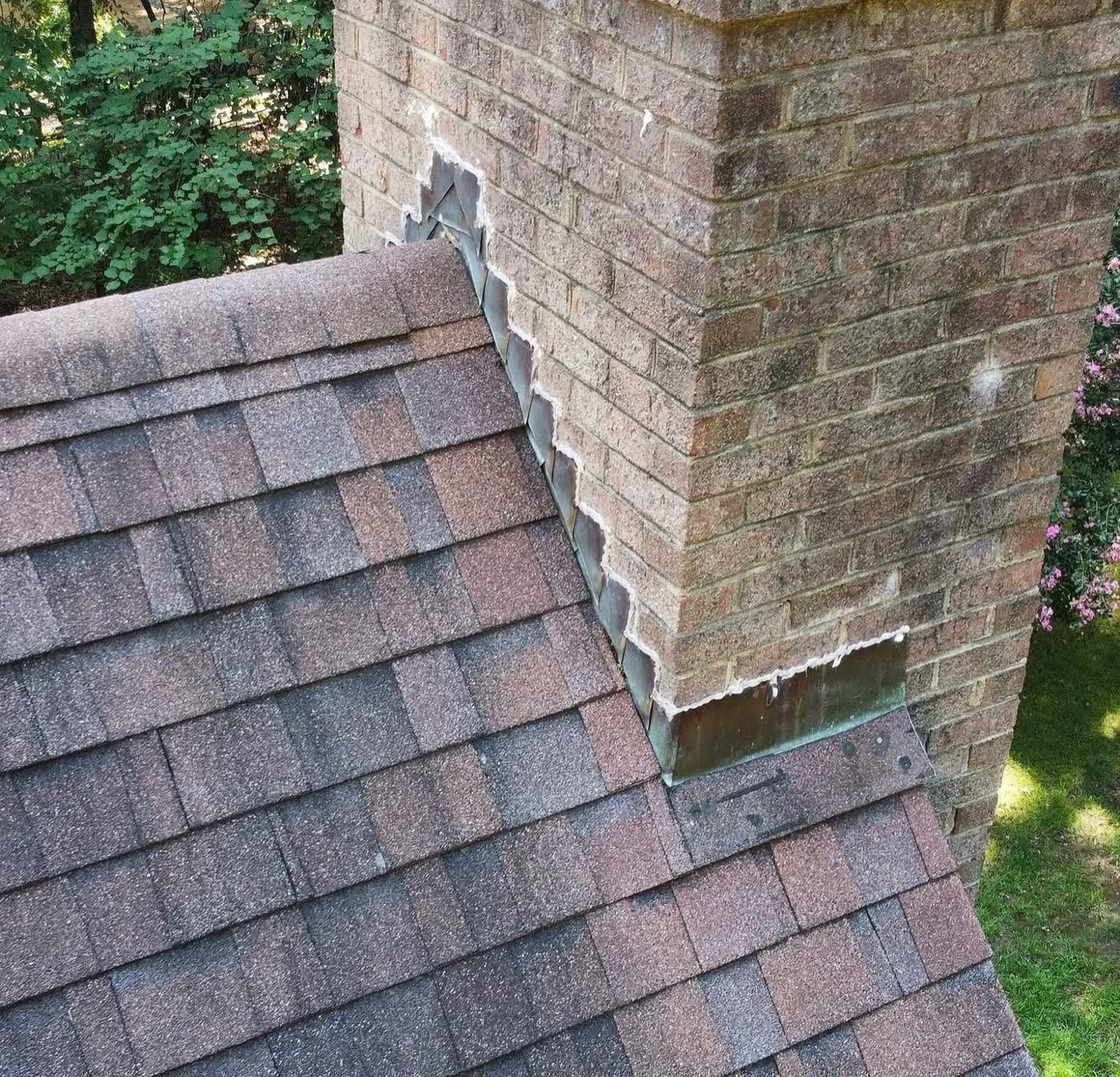
New flashing may be needed when metal is damaged, pieces do not overlap properly, or repeated patches have not stopped the leak. The right choice starts with finding the cause.
Existing flashing
New metal finish
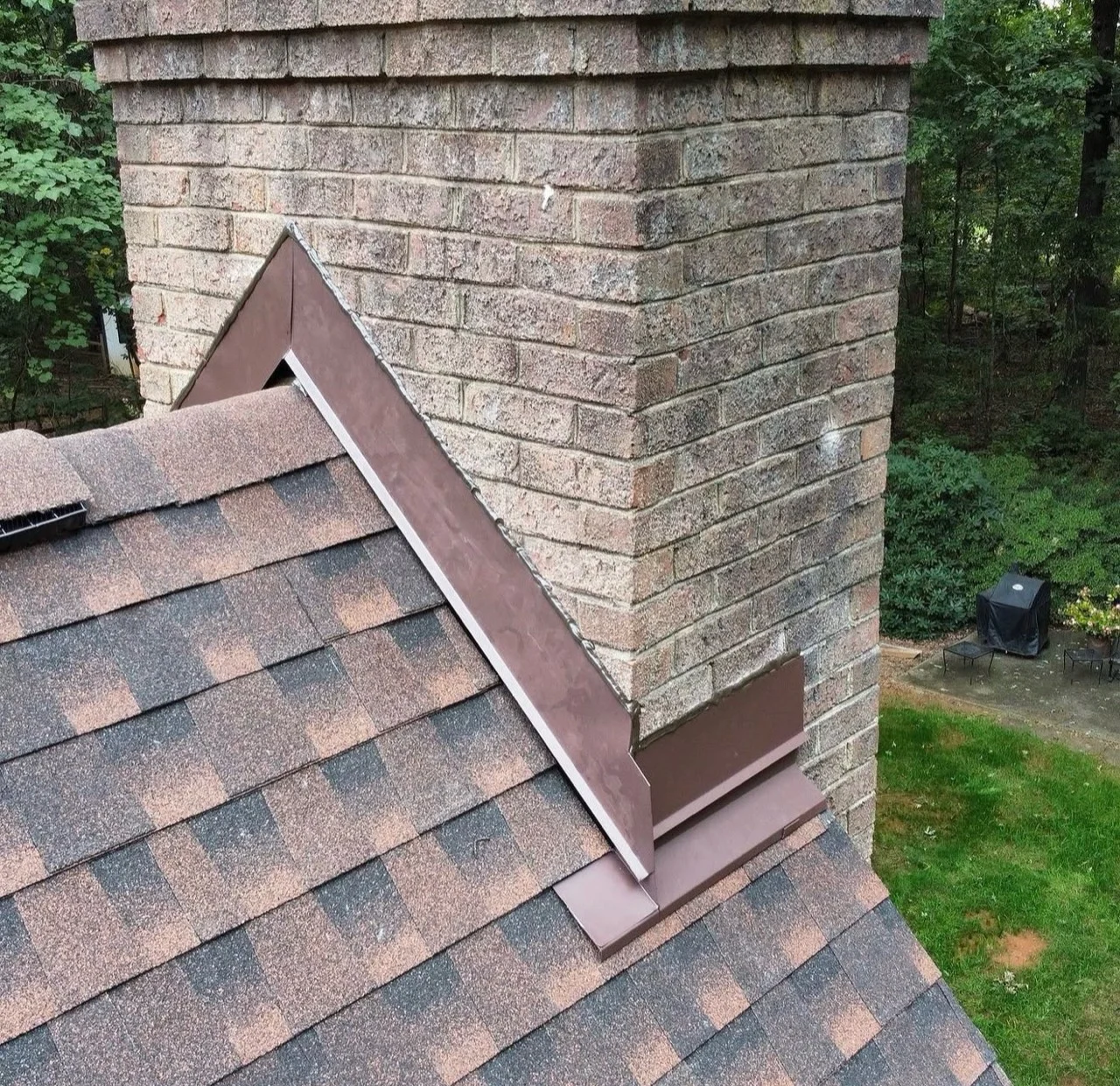
These views show the same chimney connection with older stepped metal and with a new brown metal finish. Hidden layers still matter as much as the visible finish.
Why not just add more caulk?
Caulk can seal certain joints. It cannot replace missing metal or make water flow correctly through poorly arranged layers. Ask what needs fixing beneath the surface, not just where more sealant will be applied. GAF explains the role of roof flashing here.
If the rest of your roof is in good shape, ask about a roof leak repair. If you are already planning a roof replacement, ask how chimney flashing is included in the quote.
What affects chimney flashing repair cost?
The price depends on the chimney’s size, how steep the roof is, how easily it can be reached, and what needs replacing. Damaged wood beneath the shingles can add work. A small patch and a complete flashing replacement are different jobs.
Before comparing prices, ask for a written explanation of:
- The suspected leak source and proposed repair.
- Which metal, shingles and protective layers will be replaced.
- What happens if damaged wood is found beneath the shingles.
- Whether masonry work is needed and who will perform it.
- Cleanup, anything the price leaves out, and any warranty offered on the work.
Our guide to comparing roofing estimates can help you ask the right questions. We explain the work and price clearly for homeowners paying out of pocket.
Common chimney flashing questions
Can chimney flashing be repaired without replacing the roof?
Yes, sometimes. If the nearby shingles and the wood beneath them are in good condition, only the area around the chimney may need work. An inspection helps determine how much needs to be removed and replaced.
Will caulk stop a chimney leak?
Caulk may help seal certain joints, but it cannot replace missing or damaged flashing. Find where the water enters before deciding what to fix.
How much does chimney flashing repair cost?
The price depends on the chimney’s size, how steep and accessible the roof is, and whether nearby shingles or wood need replacement. Ask for a written quote that explains the work included.
Does a chimney leak mean I need a new roof?
No. One leak does not automatically mean the whole roof needs replacing. Start by checking the chimney connection and nearby roof. If the rest of the roof is worn out too, compare repair and replacement options.
Who repairs chimney flashing in Little Rock?
Juarez Builders handles chimney flashing and related roofing work in Little Rock and Central Arkansas. Share your location and the symptoms through our quote form. Chimney sweeping, fireplace inspections and structural masonry restoration are separate services.
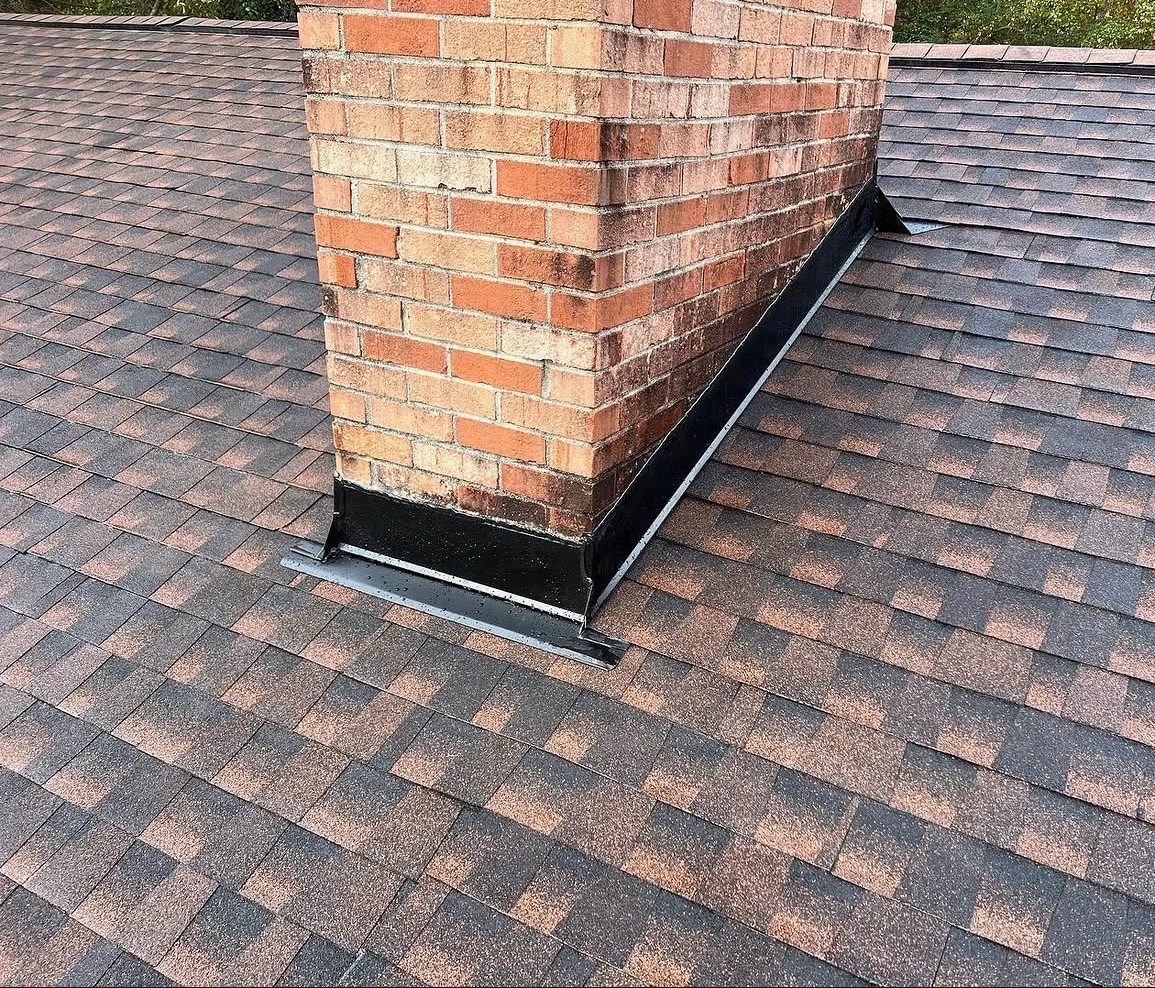
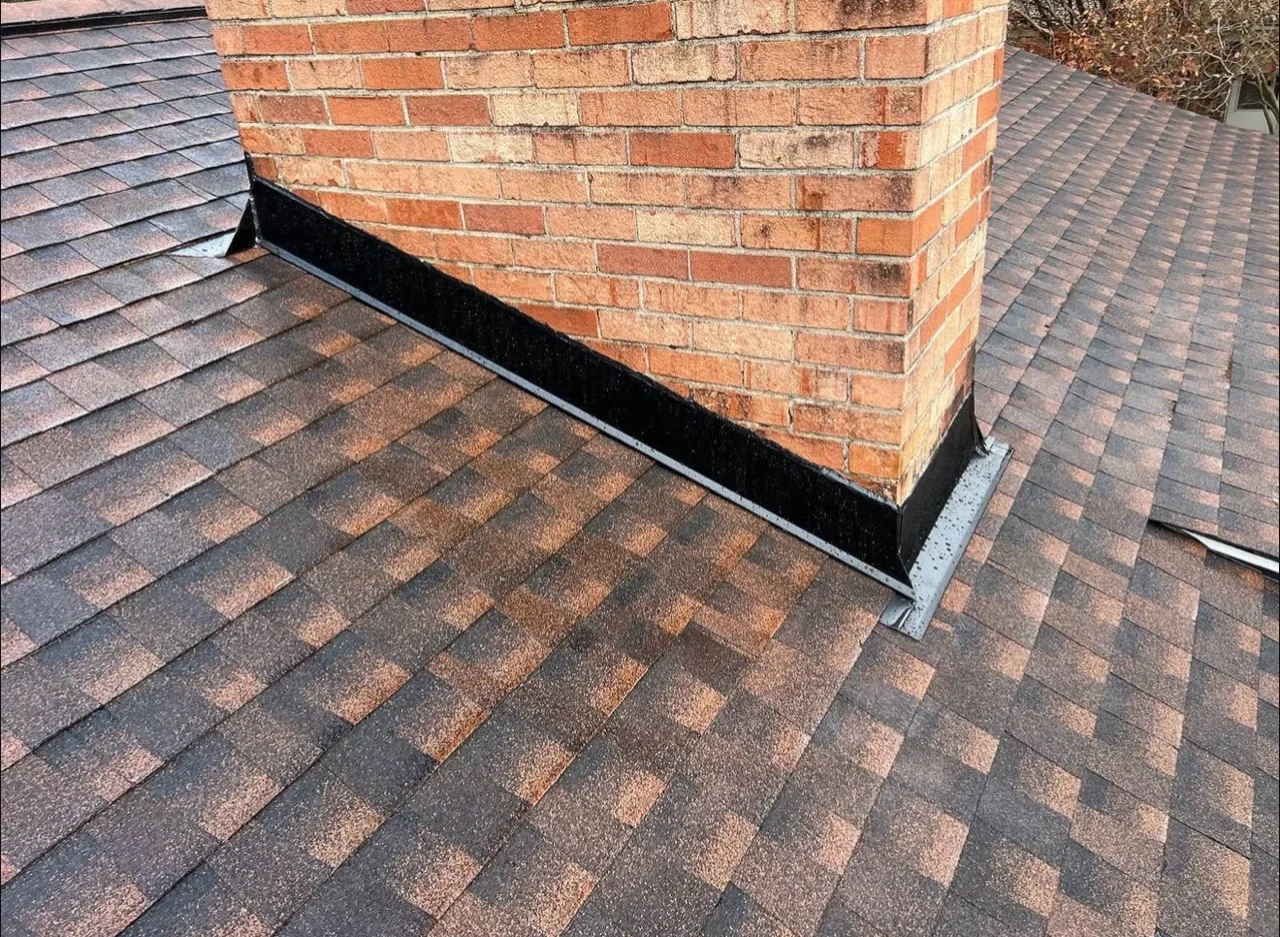
See more chimney flashing photos
Chimney flashing repair in Little Rock & Central Arkansas
Juarez Builders handles chimney flashing and related roofing work in Little Rock, North Little Rock, Maumelle, Benton, Bryant and Sherwood, Arkansas. See our roofing service areas. Tell us where the water is appearing and what has already been tried. We’ll discuss the next step for your roof.
Request a flashing repair quote ↗